

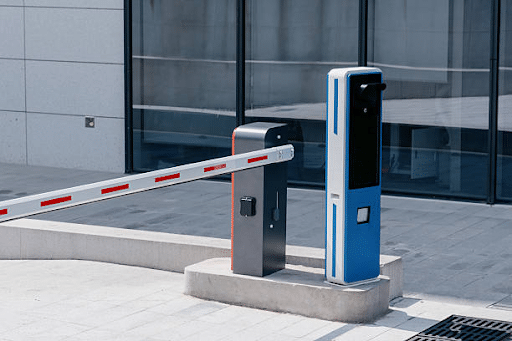
Look, high-security places deal with vehicle threats more than most people realize. One truck or car driven the wrong way can wreck a lot of stuff fast. An anti-ram barrier is built for that exact problem. It stops vehicles that try to smash through. Regular gates and fences just don’t cut it the same way.
You see these at government buildings, data centers, airports, military spots, and some industrial sites. They give you a hard physical stop. That buys time and keeps people safer. This post covers why they matter, how they work with other gear, and what you should actually think about before installing one.
What an Anti-Ram Barrier Really Does
It’s not just a fancy gate. An anti-ram barrier is made to take a real hit from a vehicle and still hold. Some pop up from the road. Others stay fixed. The point is simple. Unauthorized cars or trucks don’t get past.
A lot of sites use them at the main entrances. They still let approved vehicles through when the system says it’s okay. That’s the difference from basic access control. You get both security and control in one piece of equipment.
The Risks These Places Actually Face
Vehicle ramming isn’t rare anymore. It happens at soft targets and hard ones. High-security facilities sit higher on the list because of what they protect. Think power stations, airports, military bases, or buildings full of sensitive data.
Without something strong at the entry points, you’re counting on luck or a slow response. An anti-ram barrier changes that. It forces the threat to stop or fail right there. That alone makes it worth looking at for many sites.
Crash Rated Bollards and How They Fit In
A crash-rated bollard often works right alongside anti-ram barriers. These short posts get tested against heavy vehicles at set speeds. They look plain but stop a lot of force.
You can line them up at entrances or along sidewalks. They block cars but let people walk through. Many places mix fixed bollards with active barriers for better coverage.
Here’s what people like about them:
- They handle real impact ratings you can check
- Easy to place around existing roads and buildings
- Don’t need much day-to-day work once set up
- Still look decent instead of turning the place into a bunker
Pick the rating based on what could actually hit your site. Higher numbers mean they stop faster or heavier vehicles. A quick site check usually shows what you need.
Stronger Perimeter Protection Starts at the Edge
Good perimeter protection isn’t just a tall fence. Fences alone won’t stop a determined driver. An anti-ram barrier closes the weak spots at the gates and access roads.
It sets a clear line. Approved traffic moves through controlled points. Everything else hits something solid. That setup cuts the chance of a successful breach and gives your team more time to react.
Sites that add these usually notice daily operations get smoother too. Staff know the rules. Visitors follow the path. Security feels tighter without constant chaos at the entrance.
Benefits You’ll Actually Notice Day to Day
These systems do more than just stop ramming attempts. They help with everyday management.
Some of the practical upsides:
- Clear control over who drives in and where
- Better safety for people walking near the entrances
- Support for compliance and insurance talks
- Easy hookup with cameras, card readers, and other tools
- Solid performance that lasts for years
Places with mixed traffic get the biggest win. Delivery trucks, staff cars, and visitors all move through protected zones without constant manual checks. Quality barriers also hold up to weather and heavy use. That keeps repair costs from getting out of hand.
Picking the Right Setup Without Overcomplicating It
Not every site needs the strongest rating out there. Start by looking at your actual risks. What kind of vehicles could reach you? How fast could they go? What’s sitting right behind the entrance that needs protecting?
Then match the barrier type. Some spots use rising wedges. Others go with fixed posts or active gates. Hybrid setups work fine for a lot of places. Think about traffic flow early. You still need smooth entry for trucks and staff. The best systems handle both security and operations without slowing everyone down all day.
Getting the placement and rating wrong wastes money and leaves gaps. A solid assessment up front saves headaches later.
Want better vehicle protection at your site?
Check Out Crash Systems for Maximum Safety.
How We Help at R3 Access
At R3 Access, we work with high-security sites on this stuff regularly. We help customers look at anti-ram barrier options, crash-rated bollards, wedge systems, and related access gear. We focus on matching the right solution to the real needs of the site.
We support government facilities, utility sites, data centers, airports, and commercial properties that need stronger vehicle control. Our team walks through ratings, how things connect with existing systems, and layout questions so you end up with protection that works with your daily operations.
You can see more about how we handle these projects at R3 Access. We keep the process straightforward and aim at results that hold up over time.
Wrapping It Up
Anti-ram barriers can be used to close an opening left by normal gates or fences. There is a risk of actual vehicles at high-security facilities. These systems eliminate those risks and allow authorized traffic to flow.
They can be used in combination with crash-rated bollards and sound perimeter planning for a more robust defense. The right setup is one that will keep people and assets safe without making the entire operation impenetrable.
Look at your existing entryways first. Review the threats that are most important on your site. Then select barriers to meet those needs. Making good decisions and benefiting from good partners is the answer.
FAQs
What is an anti-ram barrier? How does R3 Access help with these?
An anti-ram barrier is an automobile security system that prevents forced access by vehicle (car or truck) at protected sites. R3 Access helps facilities evaluate and select these systems to be part of a complete crash-rated system. The location of the risk, the traffic needs and the barriers’ relationship to current access systems are taken into account. The goal is to help customers choose products that have an effective stopping power while not disrupting their operations at government, utility, and commercial facilities.
What makes a crash-rated bollard different from a standard bollard?
The bollard is formally rated to test against a certain vehicle weight and speed to prove its ability to safely stop a vehicle in the event of a collision. The same impact resistance as regular decorative bollards. Rated versions are constructed of tougher materials and designs to withstand impact. They are not picked up by the facilities when there is a danger from traffic, but when the facility needs traffic guidance or a basic level of protection.
Where do high-security buildings install anti-ram barriers?
Most locations have them in front of the main vehicle entrance, secondary vehicle entrance, and in front of critical buildings/equipment. Precise locations will depend on the traffic flow and vulnerabilities that can be seen. There are good placements of controllable points that do not interfere with emergency access. Fixed bollards may also be installed in areas where there is no obstruction along the sidewalks as another layer of defense in place that supports other measures.
Do current entrance controls work with anti-ram barriers?
Yes, they all have card readers, keypads, intercoms, license plate cameras and central security systems. This will enable authorized vehicles to roll through and have a physical barrier to anything that isn’t. The barrier is not a stand-alone system that the staff have to manage daily if they integrate it into the existing system.
What is usually required for these barriers?
For most quality anti-ram barriers, the anti-ram barriers have to be visually inspected, lubricated and tested regularly for proper function of the system and moving parts. Even less maintenance is required with fixed bollards. Weather and over-use can affect performance over time, and scheduled inspections can help detect small issues early. Most sites keep their systems reasonably long with proper installation and choice of the right product.