

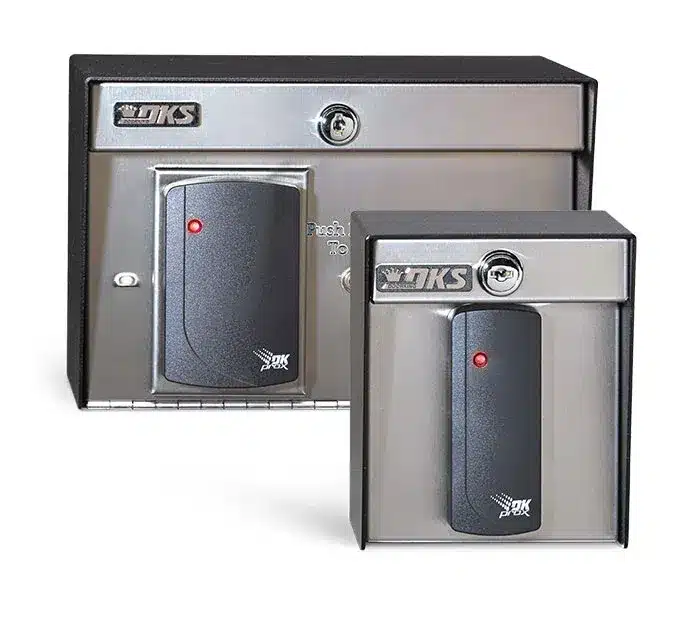
Building properties are no longer just passive spaces that open and close at scheduled hours. They respond and adapt based on how people move through them. Access control card readers now play a role that extends far beyond just door security. They can now influence how the entire building operates.
Modern card readers are designed for easier integration with smart building systems. They connect access events to building automation, analytics, and safety infrastructure. It turns access control from a standalone feature into a foundational layer of building intelligence.
What Does Integration with Smart Systems Mean?
Integration means that access control card readers communicate directly with building management systems rather than operating in isolation. Entry data flows into platforms that manage lighting, HVAC, occupancy tracking, and emergency protocols. The result is a building that responds in real time to how spaces are used.
When someone enters a secured area, the system can activate lighting or adjust airflow. Some even automatically update occupancy dashboards.
These responses are governed by predefined rules rather than manual input. Delays and human errors are thereby reduced. Cloud-based technologies enable centralized oversight across multiple sites, eliminating on-site interaction.
This method switches from a reactive to a more contextual approach to access control. Doors no longer just open or stay closed. They inform the building about what is happening inside it.
Security That Supports Operational Efficiency
Access control basically exists to manage who enters a space and when. Integration enhances that purpose by extending its impact across the building. Entry data then becomes a reliable signal for operational decisions rather than a mere static security log.
One of the most apparent benefits of integration is energy management. Smart climate control systems can reduce energy consumption in commercial buildings by up to 30%. When entry data from card readers signals occupancy, the system can automatically adjust temperature set points or turn off lights in unoccupied zones.
Integration also supports real-time visibility into space utilization. Facility managers can see where people actually are throughout the day. This is particularly useful in flex-space environments where occupancy fluctuates by hour or team.
Emergency Response Becomes Coordinated
One of the most important benefits of integration is how systems behave during emergencies. When integrated with alerting and building automation, card reader systems become more than door guards. They contribute to life safety.
Smart systems in emergencies can,
- Automatically unlock designated exit paths while other zones stay secure.
- Provide first responders with live access logs and occupancy data
- Trigger alerts across multiple systems
This unified response reduces delay and helps emergency teams understand building conditions instantly.
Integration with wireless access control systems further improves agility. Wireless deployments reduce cabling constraints and allow remote reconfiguration without physical rewiring.
A More Intuitive Experience for Occupants
Well-integrated buildings feel easier to use, even if occupants never think about the systems behind the scenes. When access control card readers connect with other building systems, everyday interactions become smoother.
Employees experience workspaces that adjust naturally as they arrive. Guests move through facilities without unnecessary delays. Facility staff devote more effort to proactive upgrades and less time to manual requests. The building ultimately supports people instead of asking them to adapt to rigid systems. All of these are real implementations in modern smart offices where interconnected systems operate under one management umbrella.
This kind of experience matters. Studies prove that organizations using integrated smart building technologies see measurable improvements in productivity and space utilization within the first year of deployment.
Analytics That Drive Better Decisions
Data is only valuable when it’s actionable. Access control card readers generate streams of entry and movement data through which leaders gain insights into utilization patterns and even security anomalies.
Recent industry analysis shows that facilities using integrated building analytics improve operational performance by up to 25% within the first year of deployment.
Once entry behavior is understood in context, buildings become platforms for optimization rather than static infrastructure.
The Role of Wireless Access Control Systems
Not all integrations rely on wired connectivity. Wireless access control solutions now provide more flexibility with fewer complexities in installation. This is valuable for retrofit projects where new wires would be disruptive or prohibitively expensive.
IT staff can remotely monitor and configure devices through an encrypted protocol. They can also facilitate synchronized reactions without the constraints of physical wires.
Integration Supports Stronger Security Policies
Smart buildings are not just comfortable and efficient, they are also a lot safer. Integration allows access rules to interact with security barriers and gates through system-level co-ordination.
A failed entry attempt at a high-security door can trigger alerts and camera focus, or a tailgating detection system can be activated during critical hours. Even building automation can automatically pull reports and log incidents. Security staff can then concentrate on high-priority duties and lessen the need for human monitoring.
Planning for Integration
Integration does not happen by default. It demands careful preparation and adherence to standards that prioritize security and interoperability.
- Choose open protocols. Ensure that your access control hardware and smart building platform support standards like BACnet, MQTT, or other widely adopted interfaces.
- Secure data flows. All communication between card readers and cloud components must use strong encryption and authentication.
- Centralize the management to reduce complexity and provide clear visibility into interdependent systems.
- Start with core integration points like HVAC and lighting before expanding into advanced automation or analytics.
These principles minimize risk and maximize the value of integration.
Final Word
Access control card readers can absolutely be integrated with smart building systems, and when they are, buildings operate with greater awareness and purpose. Occupants can experience spaces that respond to their presence without disruption. Wireless access control systems make this integration more accessible than ever, particularly for existing buildings that need flexibility.
Integrate your building systems the right way with R3 Access.
Most Asked Queries
1. Can access control card readers work with existing building systems?
Yes. Many legacy systems can be connected through gateways or cloud platforms that synchronize entry data with building management modules. However, open standards and middlemen will be required.
2. Do wired vs. wireless access control systems have similar security levels?
Strong encryption and authentication mechanisms are similar in both these systems. Yet wireless control systems have the benefit of easy deployment and scalability.
3. How does integration improve energy efficiency?
Access data provides accurate occupancy signals. This allows building systems to operate based on actual use rather than assumptions or fixed schedules.
4. Is specialized software needed for integration?
Most smart building management systems already support integration modules for access control. But software can bridge components without custom development when systems adhere to open protocols.