

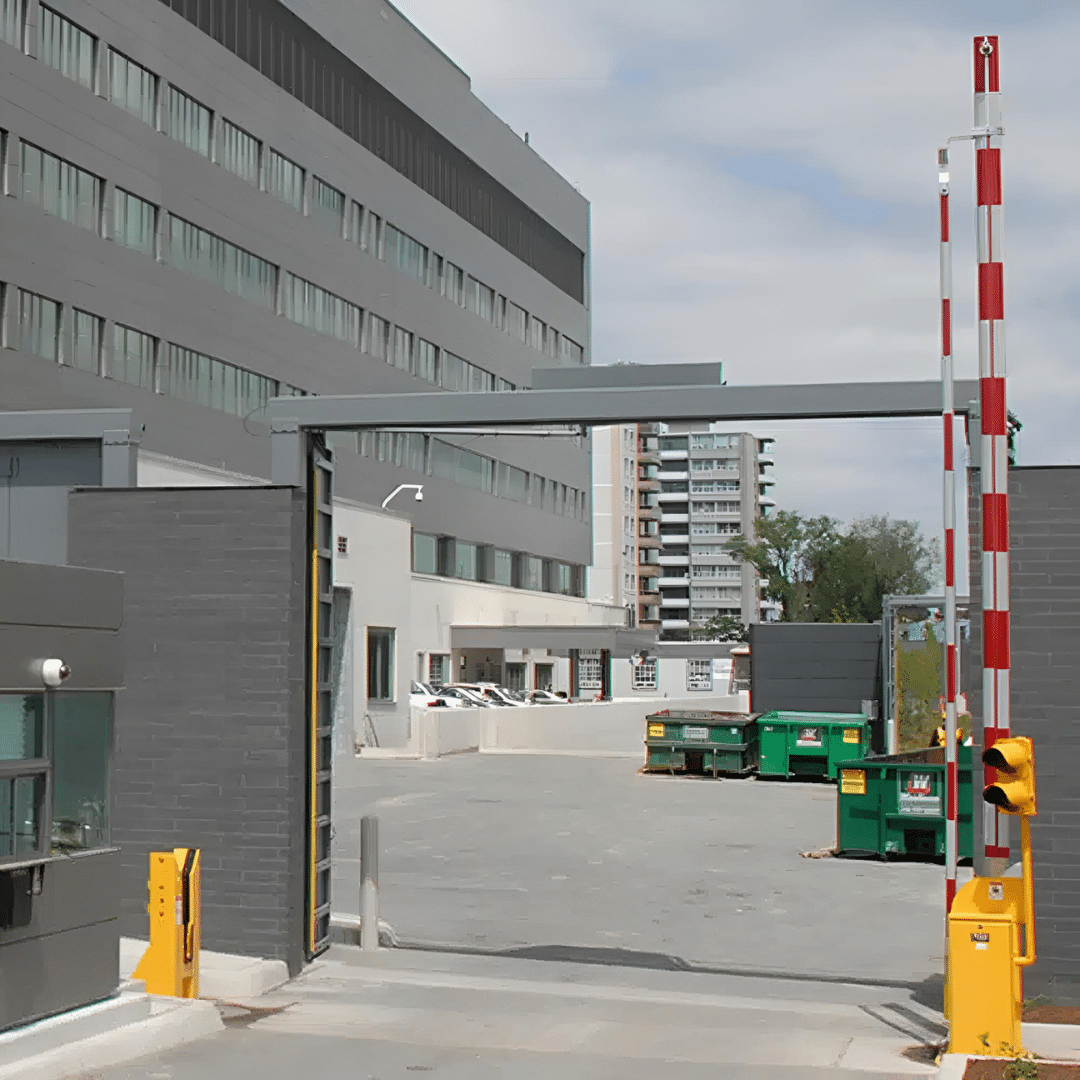
Security used to be simple. A guard at the gate, maybe a camera, maybe not. It worked until it didn’t.
Now? Different story.
Commercial spaces deal with more risk than ever: unauthorized vehicles, theft, accidents, and even intentional vehicle attacks. That’s exactly where security barriers and gates step in. Not just as physical blockers but as a full system that controls who gets in, how fast, and under what conditions.
And honestly, if a facility still relies only on basic gates or manual checks, it’s already behind.
Let’s break this down properly.
What Are Security Barriers and Gates, Really?
At a basic level, they control access. But modern systems go way beyond just opening and closing.
We’re talking about:
- Crash-rated barriers
- Automated gate arms
- Bollards
- Wedge systems
- Anti-ram gates are designed to stop moving vehicles
These aren’t just entry points. They’re engineered systems built to control, restrict, and, if needed, stop a vehicle completely.
And yes, that last part matters more than most people realize.
Why Commercial Facilities Can’t Ignore Vehicle-Based Threats
Here’s something people don’t always think about—vehicles are one of the biggest security risks.
Not just theft. Not just trespassing.
But actual impact threats.
A truck doesn’t need permission to crash through a weak gate. And once it’s inside, damage happens fast.
That’s why high-security environments, airports, government buildings, and refineries don’t rely on standard gates. They use anti-ram gates and crash systems that are tested to handle extreme force.
Even for mid-level commercial sites, the risk remains there. Warehouses. Logistics hubs. Data centers. All vulnerable.
So yeah, basic access control isn’t enough anymore.
How Security Barriers and Gates Actually Improve Safety
These systems improve safety in a few very real, very practical ways.
1. They Physically Stop Unauthorized Vehicles
This is the most obvious one.
Crash-rated systems are built to absorb and stop impact. They don’t slow it down; they stop it.
For example, a properly installed vehicle wedge barrier rises from the ground and blocks a vehicle instantly. No gap, no weak point.
Learn more about how a vehicle wedge barrier works in high-security environments.
That level of control changes everything.
2. They Control Entry Without Slowing Everything Down
Security shouldn’t create chaos.
Modern security barriers and gates integrate with:
- Access control systems
- RFID readers
- License plate recognition
- Remote monitoring
So vehicles can move in and out without constant stopping, fast entry, and controlled access.
No long lines. No confusion.
3. They Reduce Human Error
Manual security has limits, guards get tired, and mistakes happen.
Automated systems don’t “forget” to check credentials. They don’t guess. They follow rules exactly as programmed.
That consistency is what improves overall site safety.
4. They Protect High-Value Assets and People
Think about what’s inside most commercial properties:
- Equipment
- Inventory
- Data
- Employees
Now imagine all that exposed to uncontrolled access.
Not a great scenario.
Security barriers create a controlled perimeter, the first and most important layer of defense.
5. They Add a Strong Visual Deterrent
This part gets overlooked.
A site with visible crash barriers, bollards, and reinforced gates sends a message:
“This place is not easy to get into.”
And that alone prevents problems before they even start.
Types of Security Barriers Used in Commercial Facilities
Not every facility needs the same level of protection. That’s why systems are usually mixed and matched.
Wedge Barriers
These are serious. They sit flush with the ground and rise when activated.
Used in:
- Government facilities
- Military zones
- High-security corporate buildings
They’re designed to stop fast-moving vehicles instantly.
Bollards
Simple but effective. Fixed or retractable posts that block vehicle access while still allowing pedestrian movement.
Common in:
- Retail spaces
- Office complexes
- Public areas
Barrier Arm Gates
These are more about control than stopping force.
They manage traffic flow and work well with access systems. You’ll see them in:
- Parking lots
- Warehouses
- Distribution centers
Crash-Rated Gate Systems
This is where Anti ram gates come into play.
These gates are tested and rated to handle vehicle impact. Not all gates are built like this, and that difference matters a lot.
Why Manufacturers Matter More Than You Think
Here’s something people often overlook.
Not all barrier systems are equal.
The performance depends heavily on the manufacturer behind it.
Reliable systems often come from established names like:
- HySecurity
- DoorKing
- FAAC
- LiftMaster
These companies have spent years refining designs, testing crash ratings, and improving durability.
So when a barrier is expected to stop a vehicle, it actually does.
Where These Systems Make the Biggest Impact
Not every site needs military-level protection. But many still need more than basic gates.
You’ll typically see advanced security barriers and gates in:
- Logistics and distribution centers
- Industrial plants
- Airports and transportation hubs
- Data centers
- Corporate campuses
- Stadiums and public venues
Basically, anywhere vehicle access needs to be controlled, tracked, and sometimes stopped.
Planning Matters More Than the Equipment Itself
Here’s the part people rush and regret later.
Choosing a system without proper planning.
A lot of projects run into issues because:
- Blueprints are outdated
- Site layout isn’t considered
- Power requirements are ignored
- Integration needs aren’t clear
And then? Delays. Extra costs. Rework.
A proper approach looks at:
- Entry/exit flow
- Vehicle types
- Required crash rating
- Integration with access systems
It’s not just about installing a barrier. It’s about making sure the system actually works in real conditions.
Technology Is Pushing These Systems Further
Security barriers aren’t just mechanical anymore.
They’re becoming smarter.
Modern setups can:
- Track vehicle entry logs
- Integrate with surveillance systems
- Trigger alerts for unusual activity
- Sync with facility-wide security platforms
So instead of just blocking access, they become part of a complete security ecosystem.
Why Businesses Are Upgrading Now
Simple answer: risk is higher, and expectations are different.
Clients, employees, and partners expect:
- Controlled access
- Visible security
- Fast entry without delays
And businesses are realizing that weak entry points create bigger problems later.
Upgrading to proper security barriers and gates isn’t just about protection anymore. It’s about operational efficiency and reputation, too.
Final Thoughts
Security isn’t one thing. It’s layers.
Vehicle access control is one of the most important layers in any commercial facility.
Basic gates? Not enough.
What works today are systems that:
- Control access
- Move traffic efficiently
- Stop threats when needed
That’s exactly where modern crash systems and anti-ram gates come in.
If you’re looking to upgrade or plan a new system, take a look at what’s available or explore complete access solutions directly at R3 Access.
FAQs
1. How do Security Barriers and gates improve safety in commercial facilities?
Security gates and security barriers develop a controlled perimeter that can regulate the access of vehicles and prevent any unauthorized access. They are able to physically stop vehicles, interface with access control, and minimize human error. This integration enhances safety as well as performance within the business context.
2. What are anti-ram gates, and what are their uses?
Anti-ram gates are systems that are used to prevent the entry of vehicles into an area that is not supposed to be entered by a vehicle. They are usually deployed in high-security locations such as government buildings, airports, and industrial buildings, as well as corporate campuses, where vehicle threats must be effectively managed.
3. What are the conditions under which a facility should consider having a vehicle wedge barrier?
When a facility needs a high level of protection against the intrusion of vehicles, it should consider a vehicle wedge barrier. They are also used in sensitive points where power interruption is paramount, like data centres, logistics centres and restricted areas.
4. Can security barriers integrate with existing access control systems?
Yes, the vast majority of modern barriers are easy to integrate with such systems as RFID, keypads, and license plate recognition. This enables the facilities to provide security and keep traffic flow smooth and efficient without having to constantly engage in manual tasks.
5. Why is R3 Access a solid option when it comes to barrier systems?
R3 Access has a broad selection of crash-rated systems, such as bollards, wedge barriers, and gate operators, and works with trusted manufacturers. Our team assists in matching the systems that are selected systems with the actual project needs and can also save time in the course of implementation.