

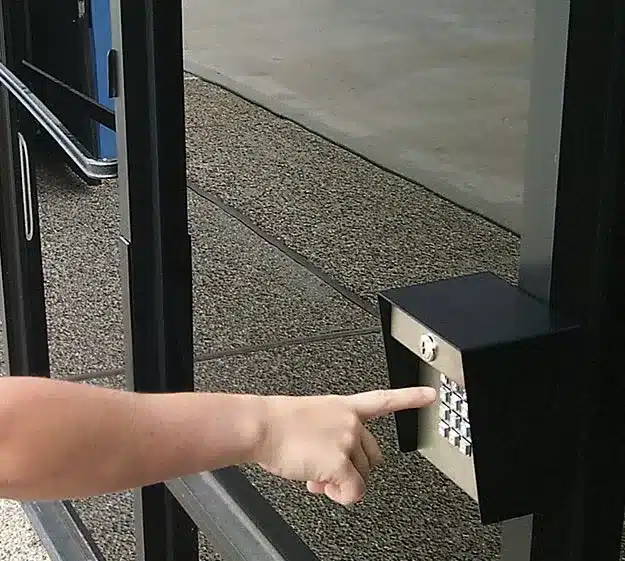
Security at an entry point sets the tone for everything that follows. A gate that feels unreliable creates tension. One that is slow causes frustration. One that is overly complex invites workarounds. All these little points of friction shape how people experience a property, often without anyone realizing it.
A keypad gate entry system changes that dynamic. It introduces order without rigidity and control without constant oversight. Access becomes deliberate rather than assumed, and movement through the space feels purposeful. What once relied on keys, memory, or manual checks now operates with consistency.
As access needs grow more complex and properties become more connected, keypad systems have evolved into tools that support security and long-term operational clarity rather than simply opening and closing a gate.
Stronger Security with Predictable Control
The most obvious advantage of a keypad gate entry system is security that’s both stronger and more predictable than traditional lock-and-key approaches.
But a keypad system uses personalized codes that can be updated or retired instantly. This credentialing modification decreases the chance of
Instead of rekeying a lock each time a key goes missing, administrators can simply deactivate the compromised code without incurring the expense of locksmith services or triggering another security breach.
Remote Management and Continuous Oversight
Pairing keypad gate entry systems with modern cloud access control systems unlocks a decisive operational advantage of remote management. Managers can track entrance attempts and update access codes. They can even get real-time notifications from anywhere in the world using cloud-connected systems.
Security teams and property managers can also instantly modify access from a phone or laptop, without having to return to the location. This speeds up and lessens the disruption of responding to security breaches.
Improves Accountability By Allowing Only Authorized Access
The keypad itself serves as a psychological cue that entry is not casual and that this area is under surveillance. Administrators can swiftly alter a code to eliminate any residual risk, even if an unauthorized person witnesses it being entered.
Each authorized code can also be associated with a particular person or group. This will enhance accountability by generating an audit trail.
Access logs provide unambiguous proof of who entered and when in the event of an incident. Such transparency is especially useful in commercial or industrial settings where several stakeholders have site access, and any gap could have financial or legal ramifications.
Explore how a professionally designed Keypad Gate Entry System integrated with cloud access control systems can strengthen perimeter security and reduce administrative burden for properties of any scale.
Greater Convenience Without Compromising Safety
Security should not feel like a barrier to everyday operations. One of the major benefits of a keypad gate entry system is convenience. Authorized users would now have to enter a code instead of searching for keys or waiting for an attendant to open a gate.
This ease of use lessens traffic congestion at access locations, particularly during rush hour.
Cloud access control systems further enhance this convenience by allowing users to manage codes remotely. They can also issue temporary access for visitors and monitor entry without requiring constant physical presence at the gate.
Integration with Other Security Technologies
A keypad system does not operate in isolation. Integration into multiple security technologies is one of its main benefits. Keypad entry can be combined with motion sensors and surveillance cameras to create a multi-layered defence system.
For instance, an unsuccessful code entry attempt may cause adjacent cameras to record or relay alarms to a central security dashboard. Access control can be integrated with automated warning systems or perimeter illumination to increase total situational awareness and extend safety beyond a single barrier.
This sort of integration is especially effective where physical security aligns with regulatory requirements or supports sensitive activities within healthcare facilities or corporate campuses.
Gradual Cost Savings
While anyone considering a keypad gate entry system must account for upfront costs, the long-term financial picture favors these systems over traditional security infrastructure.
With fewer physical components than mechanical locks and no need for frequent rekeying, maintenance costs are much reduced. Updated access policies can also be deployed remotely without service calls. Cloud systems provide consistent subscription-based pricing and do away with the requirement for substantial on-site infrastructure.
A well-managed access control approach will not need a security staff to perform standard activities. Team members get to focus on projects that directly contribute value. Centralized access control can result in operational savings that quickly surpass initial investments in properties with multiple entries or sites.
Adaptable to Changing Needs
Security needs are not static. Organizations evolve, and staff turnover fluctuates. Even usage patterns may shift. A keypad gate entry system adapts quickly to all of that.
Permissions can be adjusted by role, schedule, or even for one-time occurrences, with rapid addition or removal of access codes. Scalability is no longer an afterthought but rather a design feature when integrated with cloud access control systems. It is simple to expand to new gates, facilities, or user groups without requiring a major revamp of the infrastructure.
Businesses with expansion ambitions, property managers managing tenant rotations, or universities requiring segmented access regulations across several zones find this flexibility particularly helpful.
Supporting Broader Property Automation
A keypad gate entry system can be integrated into a broader automation system.
The system responsive gate movement that corresponds with access codes, alongside controlling access when combined with an automated gate operator. This combination operations and minimizes wear on mechanical components as time goes by. Linking keypad entry with automated operations can optimize security and user experience without manual effort.
Conclusion
A keypad gate entry system works best when it becomes part of the property’s rhythm rather than a point of friction. It brings structure to access and consistency to daily movement, all without demanding attention.
When paired with cloud access control systems and reliable gate automation, the result is access that aligns with how properties operate.
Learn how R3 Access can simplify secure gate entry.
Most Asked Queries
1. What is a Keypad Gate Entry System?
It’s an electronic access solution that lets users enter a unique numeric code to gain entry. It enables controlled permissions for different users.
2. How does it differ from cloud access control systems?
A keypad system provides local entry control. But a cloud access control system extends remote management and real-time monitoring with centralized control across multiple access points.
3. Can a keypad system work with an automated gate operator?
Yes. Integration with automated gate operators works well. The gate opens smoothly and securely when a valid code is entered.
4. Is remote access management secure?
Modern cloud access solutions use encrypted connections and multi-factor authentication to make sure that the remote changes and monitoring maintain high security standards.
5. Will these systems save businesses money?
Over time, yes! Reduced reliance on physical keys and fewer maintenance calls will definitely result in lower total cost of ownership.