

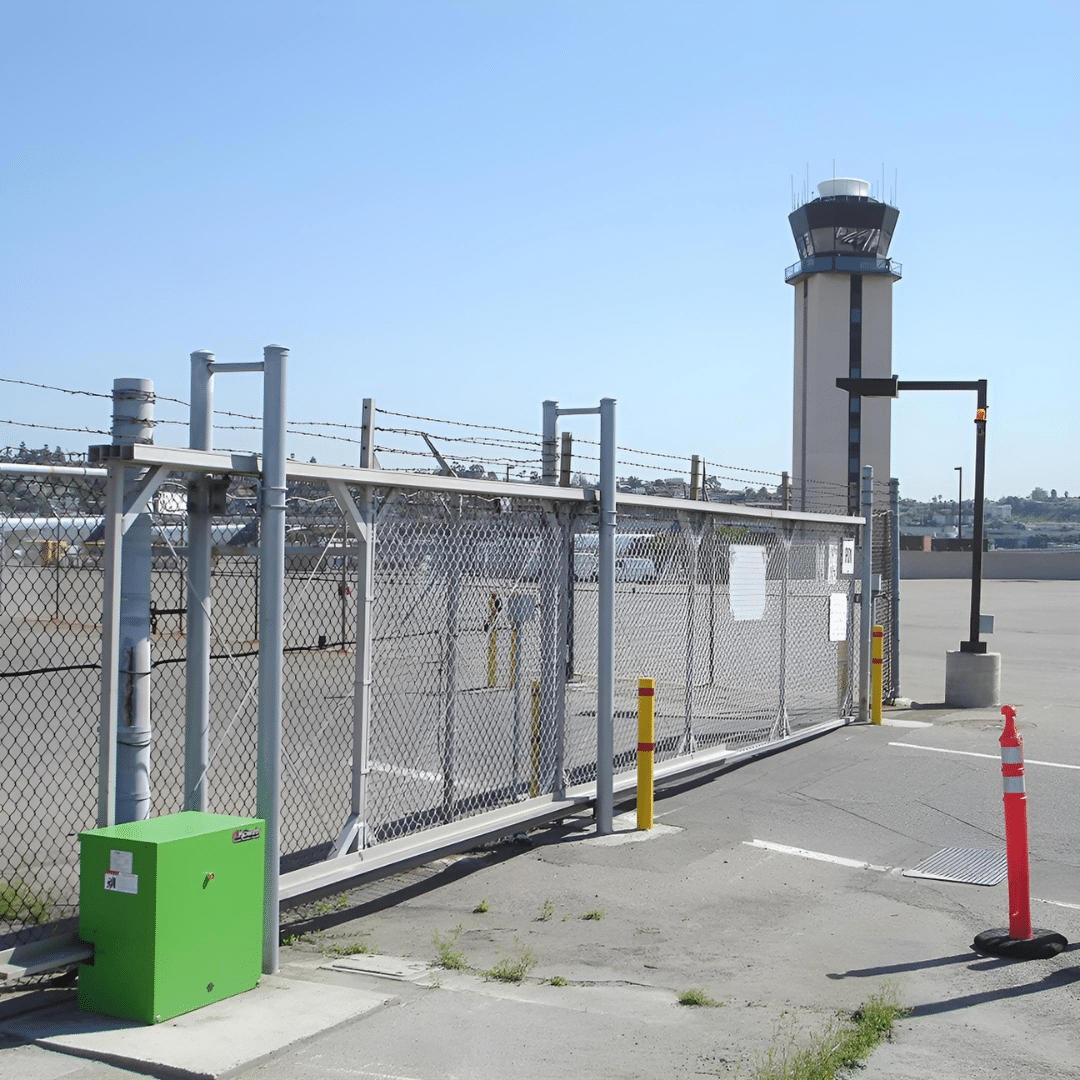
Look, if you are running a busy manufacturing plant, a big distribution hub, or some chemical facility, you already know how it goes. Normal commercial gear just doesn’t last out here. Everything you buy has to be bigger, heavier, and basically ready to take a beating every single day. Your perimeter security is the exact same story.
Think about your front gate for a second. On any random Tuesday, you have massive semi-trucks rolling in, contractors showing up, and employees arriving in huge waves during shift changes. That gate might have to open and close hundreds of times in just one day. Now, throw in a blistering July heatwave, a freezing January blizzard, or a thick cloud of dust from a nearby construction site.
If that gate motor quits on you? Everything just stops. Trucks start backing up all the way onto the main highway, your logistics schedule gets totally ruined, and your security guys are stuck outside in the freezing cold or rain trying to manually haul a heavy steel gate open. It is a total nightmare, honestly.
So, how do heavy-duty Industrial Gate Openers actually survive these brutal conditions? It isn’t just luck or good fortune. It comes down to serious mechanical engineering, rugged internal parts, and choosing the exact right setup for your specific location.
The Reality of Environmental Stress
Most folks never even think twice about gate operators until they stop moving. But if you actually pop open the metal cover of a modern Automated Gate Operator, you realize it’s basically a computer hooked up to a massive motor, all sitting out completely exposed to the elements year-round.
Industrial sites are just brutal on machinery. Depending on where your plant is located, your gates have to fight through a whole mess of severe issues:
- Extreme Heat: In the summer, the inside of a metal gate operator box turns into a literal oven, easily hitting way past 140°F.
- Sub-Zero Cold: Freezing weather thickens up the gear grease, makes structural metal brittle, and kills backup batteries fast.
- Dust, Dirt, and Flying Grime: Facilities like concrete yards, grain terminals, or heavy mills have tons of airborne particles that love to get inside gears.
- Constant Moisture and Ice: Heavy rain, coastal salt air, and freezing ice buildup will rust out cheap components and jam up moving parts in no time.
To actually survive all that crap, industrial-grade systems are built totally differently than the cheap residential gate openers you see in a suburban neighborhood.
Surviving the Deep Freeze: Winter Challenges
Cold weather is a notorious killer for outdoor machinery. When the temperature drops way below freezing, standard grease inside a gearbox starts turning into thick, sticky molasses. Instead of helping the gears turn smoothly, it actually fights against the motor.
If you try using a standard motor to pull a massive, ice-covered iron gate in the dead of winter, that motor is going to overheat fast. It works way too hard just trying to overcome the frozen grease, which trips a breaker or burns out the control board completely.
High-end industrial systems solve this by using specialized low-temperature lubricants that stay fluid even when it’s well below zero out. Many heavy-duty operators built for northern climates also come with built-in internal heaters. These small, thermostatically controlled heaters keep the electronics and the gearboxes warm enough to function normally, so the gate moves at regular speed even during a nasty winter storm.
Then you have the physical gate itself to worry about. Snow piles up, ice coats the tracks, and everything gets incredibly heavy. That’s why picking the right style of gate, like a cantilever system or a vertical lift gate, makes a huge difference for winter operations since they don’t rely on a track running along the ground that constantly gets clogged with ice.
Beating the Heat and High Duty Cycles
On the flip side, extreme heat brings its own set of headaches. When an electric motor runs constantly, it generates a ton of internal heat. If the outside air is already burning hot, that heat has nowhere to go.
Cheap motors will hit their thermal safety limit quickly and just shut down to protect themselves from melting. In the middle of a busy shift at a fulfillment center, you can’t afford to have a gate take a twenty-minute “nap” to cool down.
True industrial gate operators are built for what’s called a continuous duty cycle. This just means they are rated to run 100% of the time without needing any rest periods.
To handle that kind of thermal stress, these systems use heavy cast-aluminum or iron housings that act like heat sinks to draw warmth away from the motor. They also feature advanced insulation on the internal motor windings and built-in cooling fans to keep air moving inside the chassis.
Fighting Dust, Water, and Debris
For a lot of plants, the weather isn’t even the biggest threat; it’s the random stuff flying around in the air. If you operate a facility that processes wood, chemicals, aggregates, or food, there is always dust and moisture in the environment.
If dust ever gets inside the electrical enclosure, it kinda settles down right on the circuit boards. And then a little bit of humidity mixes in with that dust, so suddenly you end up with a conductive gunk that can make a short circuit and that fries the entire motherboard.
So, for this reason, industrial access hardware tends to lean on highly rated weather-proof enclosures. You really should check for gear that comes in NEMA 4 or NEMA 4X rated enclosures. Those housings are sealed up pretty tight against windblown dust, rain, and even splashing water. The “X” variant adds stronger corrosion resistance too, which is honestly pretty critical if your facility uses chemicals or is close to the ocean, where salt air can wreck metal in just a couple years.
Inside the mechanical drive system, high-quality manufacturers use totally sealed gearboxes. This keeps the oil clean and prevents dirt from grinding down the gears like sandpaper.
Power Dynamics and Electrical Protection
Extreme weather usually brings unstable power grids. Lightning strikes, brownouts from high regional power usage, and sudden power surges can completely destroy sensitive gate electronics in the blink of an eye.
Plus, industrial facilities themselves are full of heavy machinery that causes spikes and electrical noise on the local power lines when big equipment cycles on and off.
To protect the system, professional industrial operators feature robust surge suppression built right into the main control boards. They also rely heavily on battery backup systems.
But standard batteries absolutely hate extreme temperatures. To keep the gates working during a power outage in extreme weather, these setups use advanced battery heaters or specialized solar-ready regulators that manage charging cycles carefully based on the ambient temperature. This ensures that if the main power goes down during a severe storm, the gate still opens for emergency vehicles or exiting staff.
Choosing the Right Hardware for Your Plant
Every industrial property has its own specific set of challenges. A food processing plant has different sanitation and moisture concerns than a steel mill or a secure military base.
When you’re upgrading or planning out your perimeter security, you need to match the operator to the physical structure of your gate. Whether you’re dealing with massive slide gates, heavy swing gates, or fast-acting vertical lift options, the mechanical drive system needs to be carefully matched to both the weight of the gate and the local climate.
It’s also worth noting that many projects run into major roadblocks early on because of outdated facility blueprints or incorrect site specifications. Ordering a heavy-duty security system only to find out during installation that it won’t fit the existing physical layout or doesn’t match the power supply is a huge waste of time and money.
That’s why taking the time to consult with industry experts who understand the latest equipment specs and compatibility requirements is so important before purchasing any hardware.
If you are looking to learn more about selecting the right high-performance industrial gates and pairing them with commercial-grade access technology that won’t quit when the weather gets rough, checking out professional distribution options is the best path forward.
To explore top-tier automated gate operator hardware and find compatible security solutions for your site, visit R3 Access.
FAQs
How do industrial gate openers handle below-freezing temperatures?
They use special low-temp lubricants so the oil doesn’t freeze or get sticky like molasses. A lot of heavy units also have small internal heaters built in. These switch on automatically to keep the gears and circuit boards warm enough to move the gate normally.
What does “continuous duty” mean for an automated gate operator?
It means the motor can run non-stop all day long. Cheaper residential motors overheat and shut down if you use them too much back-to-back. Industrial ones use heavy iron housings and internal fans so they can cycle hundreds of times without needing a break.
Can dust and dirt cause an industrial gate motor to fail?
Absolutely. If fine grit gets inside, it ruins the gears and shorts out the electronics. That’s why industrial setups use totally sealed gearboxes and NEMA-rated metal boxes to keep all the flying dirt, rain, and grime out.
Why do site specs and blueprints matter so much when ordering gate hardware?
Because people often order a heavy security system using old blueprints, only to find out during installation that it doesn’t fit the actual space or match the power supply. Talking to a distributor first saves you from massive shipping returns.
Do extreme weather conditions affect gate safety features?
They can try to, but high-end systems use heavy-duty photo-eyes and loop sensors designed to cut right through snow, heavy rain, or thick fog. This keeps the safety reverse working so nobody gets hurt even when the weather is terrible.