

Access control decisions in commercial environments are rarely made in isolation. They tend to follow moments of pressure, such as operational changes and security gaps, or perhaps even the realization that existing systems no longer align with how a facility functions day to day. When access becomes difficult to manage or slow to adjust, the technology behind it needs to be reviewed.
Wireless access control systems are often considered during these reassessments because they respond directly to practical constraints. They reduce dependence on fixed infrastructure and allow access permissions to evolve without disrupting operations. Their adoption is driven by need rather than novelty.
Below, we explore the main benefits of wireless access control systems and why they continue to be adopted across commercial environments where flexibility and oversight matter.
Stronger Security via Smarter Access Management
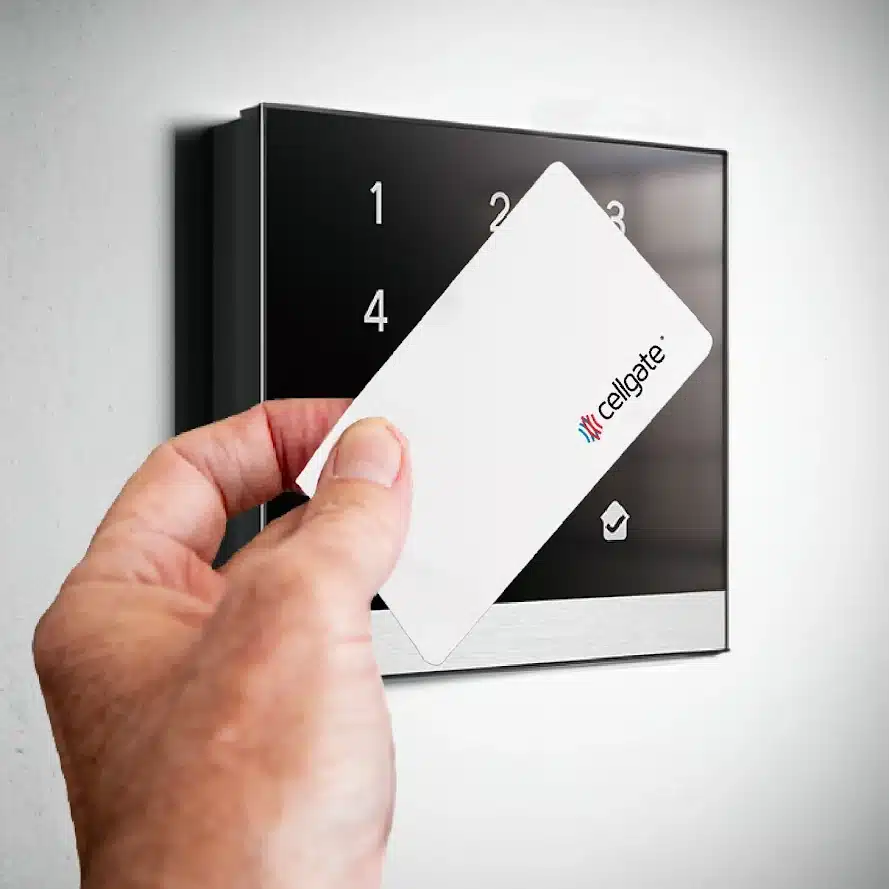
Wireless access control systems replace static credentials with trackable permissions. Rather than relying on physical keys that can be copied or misplaced, access is granted digitally through credentials such as mobile apps, encrypted key fobs, or access cards.
Many commercial burglaries involve unauthorized entry through unlocked or improperly controlled access points. Wireless systems reduce that risk by allowing administrators to instantly revoke or modify access permissions when staff roles change or credentials are compromised.
Access events are logged automatically to create a clear audit trail. This level of visibility supports internal accountability and strengthens incident response for facilities with multiple entry points.
Minimal Impact on Current Structures
The designs of most properties did not take commercial access systems into account, which is why retrofitting wired infrastructure involved opening walls and running conduit. Even coordination with nearby properties was sometimes required.
Wireless access control systems reduce this disruption by minimizing cabling requirements.
The reduced installation footprint also expedites deployment timelines and limits interference with daily operations. Leased spaces and multi-tenant properties can benefit the most from it.
Adaptability as Access Needs Change
Commercial facilities rarely remain static. Staffing levels shift, departments expand, and access requirements change as operations develop. Wireless access control systems are built to accommodate this movement without requiring system redesigns.
It is possible to update user rights centrally and add new access points without having to overhaul the infrastructure. This capacity for adaptation allows businesses to align access control with real-world situations rather than adjusting operations to technological constraints.
When deployed as part of broader commercial access control systems, wireless platforms support consistent policies across doors, gates, and perimeter access points while remaining flexible enough to support future growth.
Inquire about how R3 Access supports wireless access control planning for commercial and industrial properties.
Centralized Oversight Across Properties
Controlling access across different locations can be difficult when systems operate on their own. Wireless access control platforms also feature central management through secure interfaces. This allows administrators to oversee permissions and activity from a single point.
Consolidated oversight decreases the possibility of missed access disparities between sites and accelerates the response time. Centralization facilitates consistent enforcement of policies.
Reliability in a Demanding Environment
Modern wireless access control systems are built to work reliably even in situations where network connectivity is unpredictable. Because many systems save access rules locally, doors and gates can continue to function normally even during brief outages.
This reliability is important for industrial and logistics facilities where access points support vehicle flow and safety procedures. Wireless access control integrates effectively with automated entry solutions, including an industrial gate opener. This makes sure that security does not interrupt operational continuity.
Faster Credential Management and Reduced Administrative Load
Managing physical keys or manually reprogramming wired panels consumes valuable administrative resources. Wireless access control systems employ digital credential management to simplify the whole process.
Permissions can be tied to roles, timeframes, or specific locations. This reduces unnecessary access and maintains operational efficiency. Organizations that transitioned to digital access control platforms can reduce time spent on credential administration.
Integration With Broader Security Systems
Wireless access control is not a stand-alone system. Access events add to a more accurate operational perspective when integrated with video surveillance, alarm monitoring, and gate automation.
Integration gives access to trigger camera recordings or alerts, which supports faster incident assessment. This coordination is especially valuable in properties that rely on automated vehicle entry, such as those using slide gates within commercial access control systems.
The result is a security framework that functions cohesively rather than as isolated components.
Support for Compliance and Auditing
Many industries require verifiable records of access activity for compliance and risk management.
Wireless access control systems keep thorough logs that record who entered which locations and when. These records make internal reviews and audits much easier because they can be exported and searched.
Guidance from ISO/IEC 27001 emphasizes the importance of controlled access and traceable records as part of physical security governance. Wireless systems use automated and uniform documentation to cater to all of these requirements.
Prospective Economic Effectiveness
Although wireless access control systems often culminate in lower initial installation costs, their long-term financial worth is just as considerable. Fewer servicing requirements and easier upgrades remove the need for professional service calls.
Final Word
The widespread use of wireless access control systems is due to their compatibility with modern commercial and industrial buildings. They offer control that adapts to change and visibility that promotes accountability. The infrastructure also does not limit growth.
Wireless technologies deliver reliable security without unnecessary complication, but only when carefully included in business access control systems. Their capacity to support access decisions with consistency and long-term practicality is what makes them valuable.
Explore wireless access control solutions with R3 Access, designed for reliable commercial use.
Most Asked Queries About Commercial Access Control Systems
1. How secure are wireless access control systems compared to wired systems?
Wireless access control systems protect access data using encrypted communication protocols and secure credential management. The ability to banish access often benefits overall security agility.
2. Can wireless access control systems work during internet outages?
Indeed. The majority of commercial wireless access control systems are built with the ability to make decisions locally. Even if the network connection is momentarily lost, doors and gates still function according to stored permissions. Activity logs automatically sync back to the system after connectivity is restored.
3. Are high-traffic and industrial settings appropriate for wireless access control systems?
Logistics hubs, distribution centres, and industrial facilities all make extensive use of wireless access control systems. Long-term performance depends on hardware selection and system design.
4. How difficult is it to expand a wireless access control system?
Expansion is typically handled through software. New users, doors, or access points can be added without major construction or rewiring.