

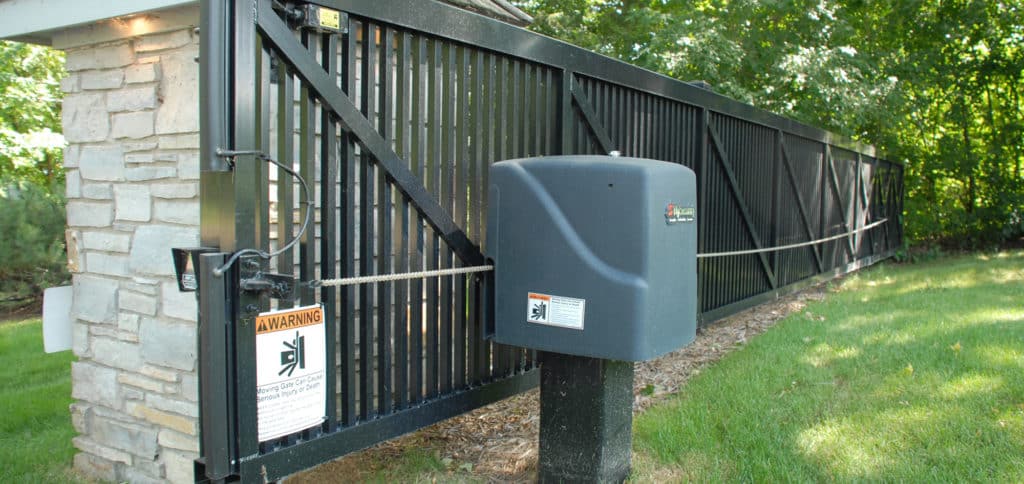
If you’ve ever managed a gated property, you know the struggle. People need access, but you can’t just leave the gate wide open and trust everything will be fine.
With all the security audits and convenience expectations, the gate has become the first line of defense and, in some ways, the first customer service moment of a property.
There’s one question that comes up again and again. Can a commercial gate opener integrate with access control systems? Or is it one of those upgrades that looks promising in theory but turns into a science project the moment you plug anything in?
The answer is yes. Integration is not only possible, but it’s also the norm these days. And in many cases, it works much better than people expect.
What once used to be “just a motor that moves a gate” has now evolved into a connected component of a larger access ecosystem. And unlike some tech trends that promise the moon and deliver a blinking LED light, this one really works.
But before we get into the how, it’s worth addressing why anyone would care about this integration in the first place. Because once you see the difference, it will probably be hard to go back to the old setup.
Why Should Gate Openers Be Integrated with Access Control?
Running a gate opener and an access control system separately used to be standard practice. It was also inefficient and occasionally chaotic.
Two systems that don’t talk to each other mean twice the work and twice the cost. Perhaps also twice the “Who let this person in?” debates.
When the Commercial Gate Opener and the access control system are designed to work as one unit, the entire experience shifts. Property managers see who came in and when. They can also see how the gate was triggered. They don’t need someone pressing a physical button from a guard booth all day.
Demand for cloud-based and wireless access control has taken off, and not by coincidence. The global access control market is projected to reach $15.80 billion by 2030 due to the surge in smartphone-based and cloud-managed systems.
If you can unlock your car, start your AC, check your security cameras, and pay half your bills from your phone, there’s no universe in which people will settle for walking to a keypad to open a gate.
Systems like those offered by R3 Access play right into this. Their platforms run through the internet or cellular networks, so the gate becomes part of the digital environment people now treat as normal. Property managers check logs from wherever they happen to be. Residents approve guests from another city. Businesses regain entry control without staffing a security desk.
Can a Commercial Gate Opener Sync With Access Control?
Yes! And more easily than people expect.
If you are picturing a scrambled mess of wires or some Frankenstein-style retrofit, you are probably living in 2007. Access systems are now designed for interoperability. The best swing gate openers and commercial-grade operators arrive pre-built for quick integration.
And this isn’t limited to one manufacturer. Many brands have been designing access-friendly hardware for years.
LiftMaster
This one is a household name. Their operators combine robust hardware with cloud-ready features, video capabilities, and UL325 safety compliance. They show up everywhere. Be it suburban driveways or high-traffic commercial entrances.
Viking Access
Their adaptive learning algorithms and self-correcting systems optimize gate access performance over time. Integration is simple, and their heavy-duty models are built for demanding sites.
FAAC
We call them a global veteran in automation. Swing gates, sliding gates, hydraulic units – you just name it. They have it all, and their systems plug easily into modern access platforms.
DoorKing
If you have ever strolled past a gated community or campus, chances are you have seen their gear. DoorKing’s telephone entry systems dominate the market. Their gate operators pair nicely with access systems.
Nice/HySecurity
They are used in high-security environments like airports and government facilities. These systems are engineered for precision and reliability.
How Does Integration Work?
If you are imagining hanging cables and installers arguing over diagrams, don’t. The process is famously anticlimactic.
- The Commercial Gate Opener is installed first, regardless of swing, slide, or hydraulic.
- The access control system is connected using network cabling, wireless modules, cellular devices, or direct hardware inputs.
- The access control panel then functions like a brain, and the opener becomes the muscle.
- Users unlock the gate through apps, fobs, cards, keypads, intercom systems, or remote dashboards.
There’s no mystical syncing session or four-hour calibration ceremony. The hardware is designed to listen with the access platform in command.
Why Are Businesses Moving Towards Integrated Systems?
Operating a gated property the old way involves staffing a booth and manually approving entries. All while dealing with constant breakdowns, striking at the worst moment possible. It is expensive and outdated.
An integrated commercial gate opener fixes all these inefficiencies in one sweep. It improves security by creating verifiable entry records. The system self-monitors, so there are fewer malfunctions. You also get voice and video installation features.
Wireless and cloud-based systems slash installation and maintenance expenses as well. Mainly because they avoid trenching, conduit runs, and heavy wiring.
No mystery why commercial sites are making the switch quickly.
Are Swing Gates Easy to Integrate?
Swing gate operators almost always pair naturally with access systems. They are used on residential driveways and commercial properties alike. They handle dual-gate setups, and now come with safety sensors and solar options that make installation even more flexible.
Manufacturers build them with access control in mind. They have now become one of the easiest systems to modernize.
Explore the Best Swing Gate Openers.
Why Has Wireless Access Control Taken Over?
There was a time when wireless access felt like a gamble. People were not sure if it would hold up in harsh weather or busy entrances. Now, the uncertainty is gone.
Wireless access became the preferred choice because it removed the ugliness of trenching, wiring, and multi-day installation. It’s also cheaper and far easier to manage. When a property wants a system that installs quickly and stays flexible as needs change, wireless access is the obvious answer.
And when paired with a commercial gate opener, it creates an entry environment that’s reliable and remarkably low-maintenance.
Who Can Benefit From These Integrations?
Property managers get control without needing to be on-site. They can track entries and adjust permissions. Issues can be solved before tenants even notice them. Then, some residents and tenants get the luxury of remote access. Businesses can also tighten security without inflating payroll costs or creating friction.
Architects and builders get cleaner installations that don’t trap them into outdated wiring constraints. They can plan smarter layouts and recommend systems that won’t be obsolete in a year.
What People Get Wrong About Access Controls?
“Integration is expensive.”
It’s usually the opposite. Wireless and cloud access systems mostly cost less than traditional setups.
“If the internet goes down, the gate stops working.”
Not true. Most systems include offline modes, keypads, fobs, and cellular backup options.
“Commercial Gate Openers aren’t smart enough for modern access control.”
They are! Especially the current lines from LiftMaster, Viking, FAAC, DoorKing, and HySecurity.
“Old gates can’t be upgraded.”
They can, and it happens constantly.
The Real Value of Integration
A standalone gate opener still does a job. But a gate opener integrated with access control changes how the entire property functions.
- Creates entry logs.
- Enables remote permissions.
- Supports schedules.
- Adds video and audio verification.
- Removes the need for round-the-clock staff.
- Keeps things moving without compromising safety.
It’s simply the direction the industry is going because the results speak for themselves.
Have You Been Thinking About Integrating Your Gate?
If you want to see real products used in installations, start with R3 Access. You will find systems from the manufacturers mentioned above and configurations built for practical environments.
It’s one of the simplest upgrades a property can make, yet the impact holds great value.
Most Asked Queries
1. Can any commercial gate opener integrate with access control?
Most modern ones can. Brands like LiftMaster, Viking Access, FAAC, DoorKing, and HySecurity are designed for it. Older units may need an upgrade module, but compatibility is rarely a dealbreaker.
2. Do swing gate operators work well with wireless systems?
Yes. Swing gates are often the easiest to sync with wireless and cloud-based access control.
3. What if the internet drops?
Good systems don’t freeze. They switch to backup methods. Be it fobs, keypads, or cellular modules. So the gate keeps functioning.
4. Is installation complicated?
Generally no. Wireless access eliminates half the traditional labor and avoids heavy trenching.
5. Can video, voice, and mobile access be added?
Absolutely. Many access control platforms include these features right out of the box.